
If someone else caused a crash while driving a borrowed car, it is natural to ask whether the vehicle owner is responsible too. New Mexico permissive use vehicle owner liability depends on more than the fact that the driver had permission. The important questions include what the owner knew, whether the owner acted carelessly, what insurance applies, and what evidence supports each part of the claim.
Request a free consultation about your crash
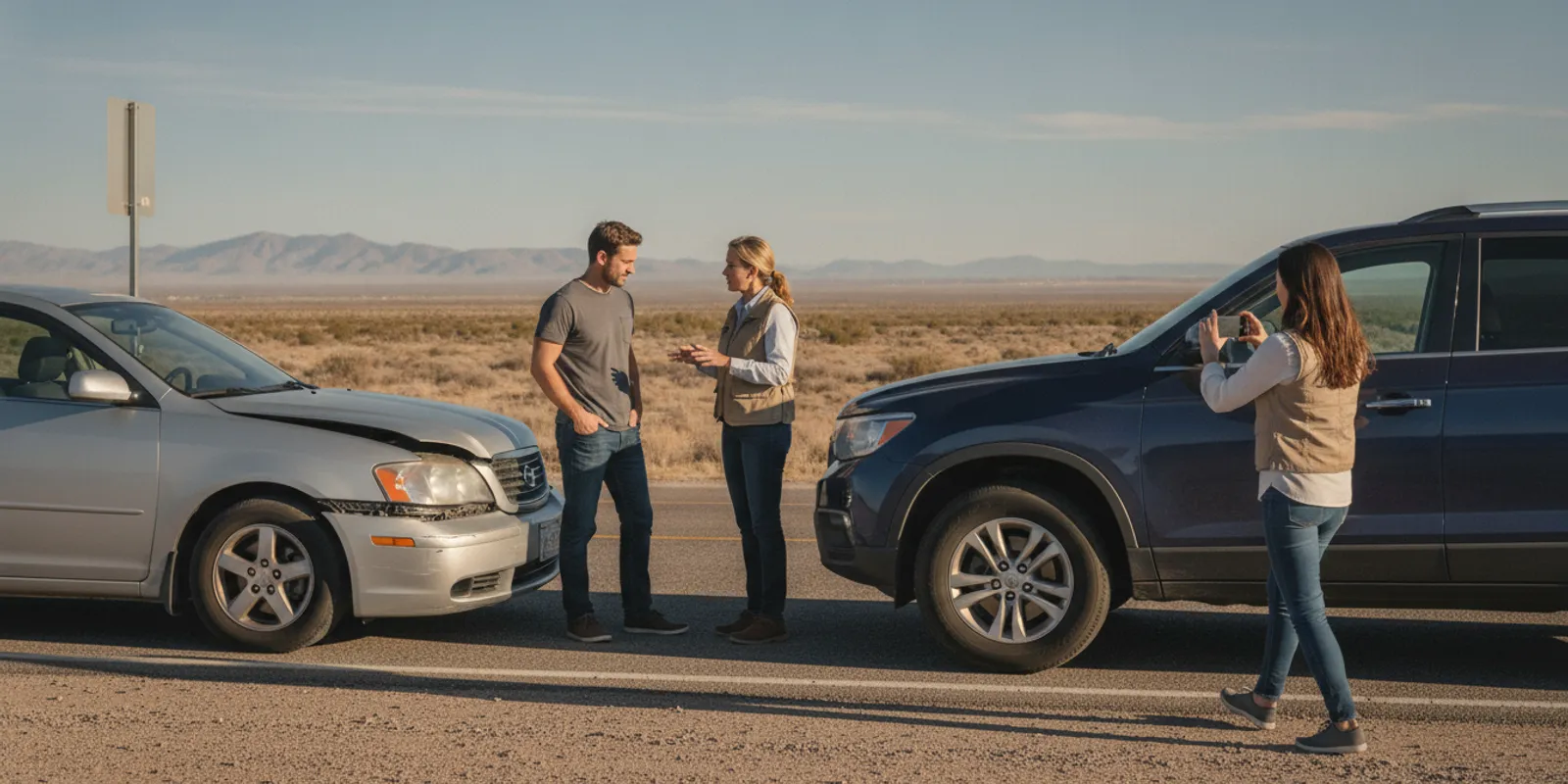
When may a vehicle owner share responsibility after a New Mexico crash?
Permission answers one factual question: did the owner allow the driver to use the vehicle? It does not, by itself, answer whether the owner committed a legal wrong or whether an insurance policy covers the resulting loss. Those are separate issues. A driver may be responsible for careless driving, while an owner may face a different claim if the facts support a recognized legal basis.
One possible basis is negligent entrustment. In general terms, that claim concerns giving control of a vehicle to someone the owner knew, or reasonably should have known, was not fit to drive safely. The inquiry focuses on what the owner knew at the time of lending the vehicle and whether allowing that person to drive created an unreasonable risk. The exact legal standards and available claims depend on New Mexico law and the case facts.
For example, evidence that an owner knowingly handed over keys to a visibly impaired person could matter. So could evidence that the owner knew the borrower could not safely operate that vehicle. A driver’s prior record may be relevant in some circumstances, but a past ticket or crash does not automatically establish the owner’s liability. The connection between the information known to the owner, the decision to lend the vehicle, and the crash must be examined.
By contrast, a careful owner who lends a car to a properly licensed adult may not become liable simply because that person later makes a driving mistake. Liability is not a punishment for owning the car. A claim needs evidence connecting the owner’s own conduct to a legally recognized theory, or another rule that applies to the circumstances.
New Mexico law should be assessed using New Mexico authorities, not another state’s statute. For comparison only, Michigan’s vehicle-owner statute expressly addresses consent in its own state: Michigan Compiled Laws section 257.401. That statute is not New Mexico law and does not establish the outcome of a New Mexico claim. It illustrates why state-specific legal review matters.
It helps to separate the questions in chronological order. Before the loan, ask what the owner knew and what the driver was permitted to do. During the trip, ask who actually drove and whether the vehicle was used for the agreed purpose. At the time of the collision, examine each person’s conduct. Afterward, review the available insurance and loss documentation. A “yes” to permission does not answer all of these questions, and a disputed answer on one point does not automatically decide the rest.
Consider two different examples. An owner lends a car to a friend who appears sober and has been driving safely for years; the friend later runs a red light. The driver’s conduct may be central, while the owner’s decision to lend the car may have had no known warning sign. In another situation, the owner sees the borrower struggling to stand or learns that the borrower is impaired, yet gives the person the keys. Those facts may warrant closer review of the owner’s conduct. These examples illustrate issues to investigate, not legal conclusions about any particular claim.
How is permissive use different from negligent entrustment?
These terms are sometimes blended together, but they answer different questions. Permissive use concerns the owner’s authorization to use the vehicle. Negligent entrustment concerns the owner’s decision to hand over control despite a risk the owner knew or should have recognized. Permission can be relevant evidence, yet permission alone does not prove that the owner acted negligently.
| Issue | Question it addresses | Evidence that may matter |
|---|---|---|
| Permission | Did the owner allow this person to use the vehicle? | Texts, calls, witness accounts, and the scope or timing of the loan |
| Driver’s conduct | Did the driver act carelessly and cause the crash? | Crash report, photographs, video, witness statements, and vehicle data |
| Negligent entrustment | Did the owner unreasonably entrust the vehicle to a driver who posed a known risk? | What the owner knew about impairment, ability, restrictions, or other relevant risks |
| Insurance | Does a policy cover this driver, vehicle, and use? | Policy language, declarations, exclusions, permission, and insurer communications |
| Other relationship | Was the driver acting for an employer or another responsible party? | Work instructions, schedules, employment records, and the purpose of the trip |
The table is a practical sorting tool, not a statement that each category creates liability. A person may have permission but no coverage under a particular policy. A policy may cover a permitted driver without proving the owner was negligent. Likewise, an owner’s possible negligence does not establish that the driver was at fault or that a particular amount is recoverable.
Permission can also have limits. An owner might allow a borrower to make a short local trip, while the driver uses the car for a different purpose or lets another person take the wheel. Whether that matters depends on the facts and the policy terms. Keep messages that show what was authorized, but do not assume that a disagreement over permission resolves the entire claim.
When reconstructing the scope of a loan, write down the basic details separately rather than relying on a general statement that “the car was borrowed.” Who asked to use it? What destination or errand was discussed? Was there a time limit? Did the owner say that only one person could drive? Was the vehicle returned and then taken again? A message that seems routine may help clarify the timeline, but its meaning should be considered with the surrounding conversation.
When a crash involves several vehicles or disputed driving conduct, determining fault may require careful analysis. Fusion Legal Group’s guide to comparative fault in New Mexico car accidents discusses why more than one person’s conduct may need examination. If the event was a broader roadway collision, the firm also explains New Mexico car accident claims.
Does permission mean the owner’s insurance covers the driver?
Not necessarily. Liability and insurance coverage are related, but they are not the same question. A policy may define who qualifies as an insured driver, address use with permission, or contain exclusions and limits. The answer depends on the actual policy, the relationship between the driver and named insured, the reason for the trip, and other facts. Do not rely only on a general description of “full coverage.”
After a crash, identify every potentially relevant policy. That may include the vehicle owner’s auto policy, the driver’s own policy, and coverage connected to an employer or another vehicle. Ask for the declarations and relevant policy terms, and preserve insurer letters and claim numbers. An insurer can investigate coverage separately from who caused the collision.
When reviewing insurance, keep a simple record of each contact: the insurer, representative, date, claim number, requested documents, and next stated step. Save letters and emails in the form received. If an insurer says a policy may not apply, ask which provision it is relying on and request the explanation in writing. This does not determine whether the insurer is right, but it helps preserve the issue for a careful review.
Federal law creates a specific limitation concerning certain rented or leased vehicles used in the business of renting or leasing. The Graves Amendment, 49 U.S.C. section 30106, addresses vicarious liability based solely on ownership in that defined setting, subject to statutory conditions and exceptions. It is not a general rule that resolves a private owner’s decision to lend a personal car. Rental, lease, business-use, and private-borrowing situations should not be treated as interchangeable.
For example, an employee who was driving a company vehicle during assigned work may raise questions about the employer and applicable commercial insurance. A friend borrowing a personal car for errands presents different facts. A rented vehicle has its own contract and statutory context. Tell the insurer and any attorney how the vehicle was obtained and what the driver was doing when the crash happened.
For a company vehicle, useful starting details can include the name of the employer, the driver’s assigned role, whether the trip was work-related, and whether the employer owned, leased, or supplied the car. For a rental, retain the rental agreement and identify who was listed as an authorized driver. For a private loan, preserve the owner’s instructions and the borrower’s response. These distinctions help direct the investigation; they do not independently establish coverage or responsibility.
If a commercial vehicle, delivery, or work trip may be involved, preserve the details of the driver’s role and the vehicle’s owner. Fusion’s pages on commercial vehicle accidents and truck and semi crashes address related investigation issues.
What evidence can help establish what the owner knew?
Owner knowledge can be difficult to prove because it often concerns conversations and events before the collision. Start by preserving records rather than trying to draw a conclusion from one fact. Save the messages about the loan, the planned trip, and who would drive. Write down names of people who heard discussions about the borrower’s condition or ability to drive.
- Permission records: Keep texts, emails, call logs, and messages that clarify who gave permission, when it began, and any limits placed on the vehicle’s use.
- Condition and ability observations: Note what people saw before the keys were handed over, including apparent impairment, confusion, or difficulty operating the vehicle. Avoid embellishment and distinguish direct observations from assumptions.
- Relevant communications: Preserve statements about a suspended or restricted license, lack of driving experience, previous unsafe conduct, or other specific concerns, if they exist.
- Crash documentation: Obtain the report number, photographs, witness contact information, and available video. Record the location, direction of travel, weather, and time while memories are fresh.
- Vehicle and policy information: Identify the registered owner, the vehicle’s regular driver, all potentially involved insurers, and any business or employment connection.
- Medical and financial records: Keep treatment instructions, bills, wage records, and receipts related to the injury. Do not delay necessary medical care while collecting claim documents.
Evidence must be obtained lawfully and preserved in its original form. Do not access another person’s phone, account, vehicle, or records without authorization. Do not pressure witnesses to adopt a particular version of events. If a text or recording is important, retain the original file and note who created it and when.
Photos of vehicle damage and the scene can help explain the collision, but they rarely establish what an owner knew before lending the car. That part may depend on communications, witness accounts, and the timing of events. A crash report is useful, but it may not decide civil responsibility or insurance coverage.
It can help to make two separate timelines. The first covers the minutes or hours before the loan: when the owner and driver spoke, what was said, what either person observed, and when the keys changed hands. The second covers the collision and what followed: where the vehicles traveled, who witnessed the event, when emergency services arrived, and when insurers were notified. Mark uncertain times as estimates. Separating direct knowledge from later recollection makes it easier to identify what still needs verification.
Preservation is time-sensitive in practical ways. A phone may replace or delete older messages, surveillance systems may overwrite footage, and people may become harder to locate. Keep the original files where possible, make a backup, and note where each item came from. Do not edit a photo or message to make it easier to read without retaining the unaltered original as well.
For a basic response checklist after a collision, see what to do after a car accident. If the other driver left the scene, the additional issues are discussed in the firm’s guide to New Mexico hit-and-run accidents.
What should an injured person do after a crash in a borrowed vehicle?
Focus first on health and immediate safety. Contact emergency services when needed, follow medical advice, and report the collision as required. Do not delay medical attention while trying to determine whether the owner or driver may ultimately be responsible. A claim investigation can happen alongside appropriate care.
- Record the basic facts. Note the time, location, vehicles, drivers, passengers, and witnesses. Ask how the driver came to use the car, but do not argue at the scene.
- Preserve available evidence. Photograph the vehicles and surroundings when safe. Save messages and contact information, and ask nearby businesses or witnesses to preserve video if relevant.
- Report the crash to the appropriate insurers. Provide accurate information and keep a record of what you submit. Avoid guessing about policy coverage or making assumptions about who is legally responsible.
- Track injuries and expenses. Keep treatment records, work absence information, receipts, and a simple timeline of symptoms and appointments.
- Get advice before a disputed issue is overlooked. An attorney can review potential responsibility, insurance, and deadlines based on the specific facts and applicable law.
Do not assume that speaking with an insurer means you must accept its initial view of fault or coverage. Read any release carefully before signing it. Avoid posting speculation about the crash or discussing legal strategy on social media. Give accurate answers, and ask for clarification when a question is unclear.
A New Mexico personal injury claim may also involve the injured person’s own conduct or the actions of more than one driver. Keep the account factual and consistent. Fusion’s New Mexico personal injury information provides context about injury claims, while a consultation can help identify which issues fit a particular event.
In practical terms, you do not need to prove the owner’s knowledge at the roadside. Focus on identifying witnesses, keeping records, and getting necessary care. If you speak with the driver or owner, avoid turning the conversation into an argument about fault. A short, accurate account of what was said and when may be more useful later than a confrontation that creates confusion.
What should a vehicle owner do after learning of the crash?
Owners should notify their insurer promptly and provide truthful information about who had the vehicle, whether permission was given, and any limits on its use. Preserve messages and records. Do not delete communications, alter documents, or coordinate accounts with the driver or witnesses.
If an owner is contacted by an injured person, an insurer, or an attorney, the owner should avoid speculation. Do not admit legal responsibility before the facts and coverage are understood, but do not misrepresent what happened. If the owner receives legal papers, note the response deadline and seek appropriate legal advice promptly. Ignoring a notice or complaint can create separate problems.
Owners should also avoid making a private payment or signing a settlement document without understanding whether it affects insurance or other claims. A conversation with an insurer is not necessarily a final determination of liability. Keep copies of all notices, communications, estimates, and repair records.
When reporting what happened, distinguish what the owner personally observed from what someone else later said. For example, “I saw the driver leave at about 5 p.m.” is different from “I think the driver was headed to work.” If the owner cannot remember a detail, it is better to say so than to fill in a guess. Accurate, consistent information helps the insurer and any later reviewer assess the relevant issues.
What facts can change the analysis?
Small differences in the timeline may matter. Did the owner hand over the keys, or did the driver take the car without permission? Was the driver authorized for that trip? Did the owner know of a specific concern before the loan? Was the vehicle being used for work? Did someone else own or control it? Each answer may affect which legal theories or policies deserve review.
The type of crash also matters to the investigation. A pedestrian struck by a borrowed car may have different witnesses and scene evidence than passengers injured in a two-car collision. A collision involving a commercial truck may require records about the company, driver, and vehicle. Relevant service pages include information about pedestrian accidents in New Mexico and accident claim support.
No single fact guarantees a result. A license issue, prior incident, owner’s relationship to the driver, or insurance provision needs context. A lawyer can evaluate which facts are admissible and significant, what records may be available, and whether further investigation is appropriate. The purpose is to assess a potential claim, not promise an outcome.
A practical review can also identify gaps instead of treating an incomplete record as proof either way. If no one can confirm what the owner knew, the next question may be whether messages, witnesses, or other records exist. If the policy has not been produced, the coverage issue remains open. If there are conflicting accounts about permission, compare each account against dates, messages, and the agreed trip. Careful evaluation means recognizing what is known, what is disputed, and what evidence could clarify the difference.
Contact Fusion Legal Group for a free consultation
Frequently asked questions
Is a vehicle owner automatically liable if someone with permission causes a crash?
No. Permission alone does not establish that the owner acted negligently or that the owner’s policy covers the driver. The driver’s conduct, the owner’s knowledge before lending the vehicle, any applicable legal rule, and the policy terms all require separate review. The specific facts and New Mexico law control.
Can an owner be responsible for lending a car to an unsafe driver?
Potentially, if evidence supports a recognized claim such as negligent entrustment under the applicable law. The important issue is what the owner knew or reasonably should have known when allowing the person to drive, and whether that decision is connected to the injury. A prior driving issue alone does not automatically prove liability.
Does the vehicle owner’s insurance always pay for injuries?
No. Coverage depends on the policy wording, driver, permission, purpose of the trip, exclusions, limits, and other facts. The owner’s insurer may investigate coverage separately from fault. Obtain and review the actual policy rather than relying on a general statement that the car is insured.
What if the driver took the car without permission?
Lack of permission may change the liability and insurance analysis, but it does not resolve every issue by itself. Preserve evidence showing whether use was authorized, who had access to the keys, and what the owner knew. The circumstances and policy language should be reviewed before reaching a conclusion.
What should I bring to a consultation about a borrowed-car crash?
Bring the crash report information, photographs, insurer correspondence, medical and expense records, and messages about use of the vehicle. A short timeline and witness names can help. You do not need to know which legal theory applies before seeking a consultation; accurate documents and facts are a useful starting point.
Whether an owner may share responsibility after a New Mexico crash turns on the evidence, the legal basis for the claim, and the insurance terms. Preserve what you know and seek a case-specific review before assuming that permission alone decides the issue.
Sources and further reading
The Michigan statute and federal law linked above address distinct legal contexts and are not substitutes for New Mexico authority. They are included only to clarify that vehicle-owner rules can depend on jurisdiction and on whether a vehicle is privately borrowed or rented or leased.

Anthony Spratley is the founder and managing attorney of Fusion Legal Group, a veteran-owned personal injury law firm serving clients throughout New Mexico. A retired U.S. Air Force Judge Advocate General (JAG) officer with 24 years of military service, Anthony has been licensed to practice law in New Mexico since 2003 and is admitted to the U.S. District Court, District of New Mexico. He has handled 350+ cases across personal injury, criminal defense, and family law—bringing battle-tested discipline to every client’s case. Anthony is a first-generation college graduate, a father of five, and a youth sports coach in Albuquerque.