
A left-turn crash can look simple at the scene, but fault often depends on the signal, the gap, and what each driver could reasonably see. The turning driver usually starts with a duty to yield. That duty does not automatically make the turning driver entirely responsible.
In a left turn accident fault new mexico claim, investigators examine whether the turning driver yielded to an immediate hazard, signaled properly, and turned safely. They also look at whether the oncoming driver was speeding, distracted, or entered against a signal. New Mexico’s pure comparative-fault rule can allow more than one driver to share responsibility.
New Mexico law also recognizes an important point that is easy to miss: after a driver yields and signals as required. Opposing traffic must yield to the vehicle making the turn. That makes the signal phase, vehicle positions, impact damage, and available video important evidence. The governing rules begin with NMSA 1978 Section 66-7-329, which provides the framework for examining the turn and the approaching vehicle together.
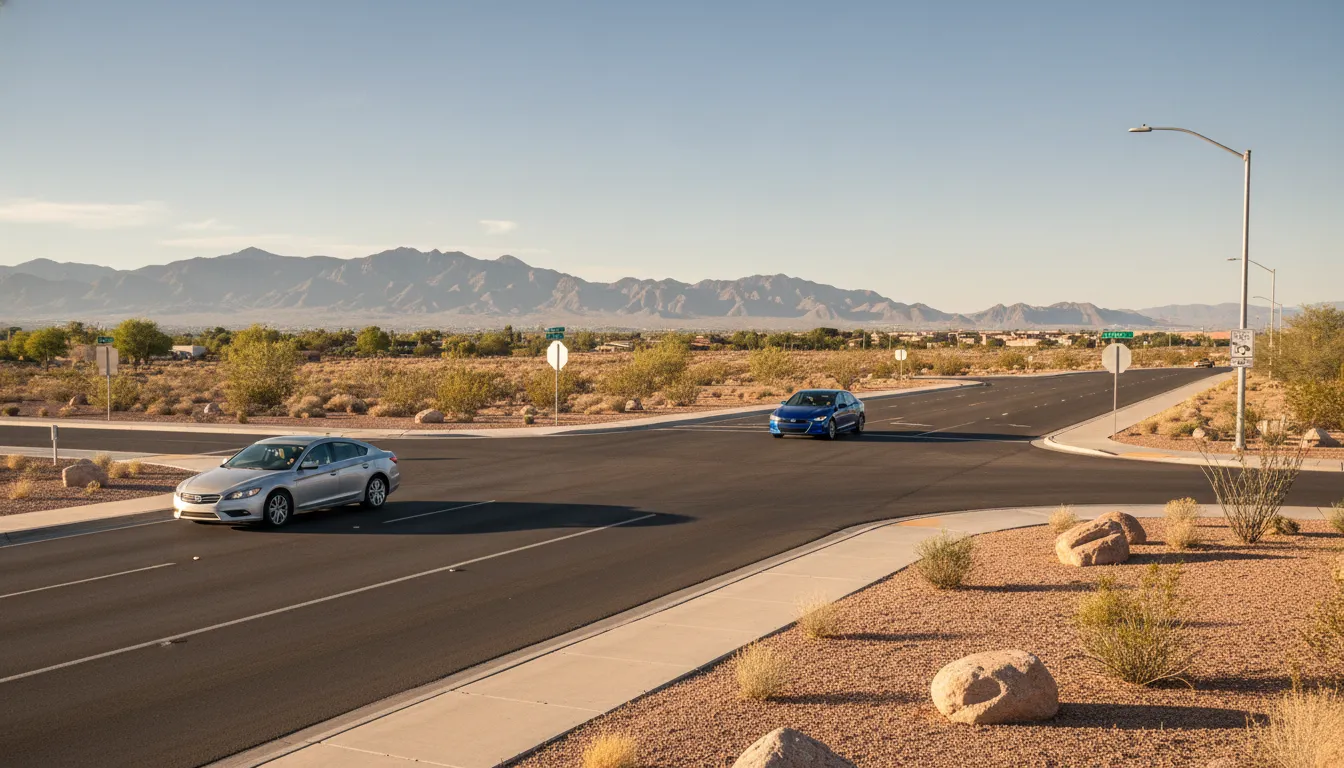
Left turn accident fault New Mexico law at an intersection
New Mexico starts with a specific yield rule, not a blanket statement that the turning driver is always at fault. Under NMSA 1978 section 66-7-329, a driver who intends to turn left must yield to a vehicle coming from the opposite direction. That duty applies when the other vehicle is in the intersection or close enough to be an immediate hazard.
The statute has a second half that matters in a disputed crash. After the turning driver has yielded and given a required signal, that driver may make the turn. Drivers approaching from the opposite direction must then yield to the vehicle that is turning. The question is often whether a safe gap existed, not simply who was turning.
NMSA 1978 section 66-7-325 adds two practical limits. The turn must be made from the proper position, and it must be possible with reasonable safety. If other traffic may be affected, the driver must signal the turn continuously during at least the last 100 feet.
A protected turn and an unprotected turn are not the same event. A green arrow usually gives the turn its own phase, so oncoming through traffic should be stopped. A solid green light or a flashing yellow arrow still requires the turning driver to yield to an immediate hazard. The signal each driver faced is part of the fault question.
| Signal the turning driver faced | What the turn usually means | Fault question to examine |
|---|---|---|
| Green arrow | Protected turn. Oncoming through traffic should be held. | Did the oncoming driver enter against a red light, or was the arrow already ending? |
| Solid green | Unprotected turn. The turning driver must still yield. | Was the oncoming vehicle an immediate hazard, or had a safe gap opened? |
| Flashing yellow arrow | Unprotected turn. Yield, then turn when the gap is safe. | Did the turning driver misjudge the gap, or did the oncoming driver close it? |
| Yellow or red | The phase is ending or has ended for that movement. | Which driver entered late, and did either one still have a clear path? |
These rules set the framework for a left turn accident fault new mexico review. They do not assign a percentage by themselves. Speed, a missing signal, a blocked view, and the point of impact still have to be compared with the statute. A broader claim, including injury and insurance questions, can sit alongside that review with New Mexico car accident lawyers.
When the oncoming driver may share fault
The left-turn yield rule is important, but it does not automatically make the turning driver 100 percent responsible. New Mexico applies pure comparative fault. A claimant may still recover when partly at fault, although the recovery is reduced by that share of fault. There is no 51 percent bar. See the firm’s New Mexico comparative fault rule guide for the broader doctrine.
New Mexico law addresses both sides of the intersection conflict. Under NMSA 1978 Section 66-7-329, a driver turning left must first yield. The approaching vehicle must be in the intersection or close enough to create an immediate hazard. After yielding and giving the required signal, the turning driver may proceed. Opposing drivers must then yield to the vehicle making the turn.
That second duty can matter when the oncoming driver creates or ignores the danger. Excessive speed may shorten a safe gap before the turn begins. Running a red light can place the oncoming driver in the path of a lawful turning movement. Distraction may prevent a driver from noticing the turn or responding in time. For more on that issue, review the firm’s guide about distracted driving.
An oncoming driver may also share fault by closing a gap that was safe when the turning driver entered it. The timing, speed, lane position, and point of impact can help show what each driver could reasonably observe. A protected green arrow and an unprotected solid green signal also create different questions about the traffic each driver faced.
The turning driver may still bear most or all of the fault when the vehicle crossed an immediate hazard. Other concerns include a missing or late signal, an improper lane position, or a poor judgment about the gap. New Mexico law generally requires a safe movement and an appropriate signal when other traffic may be affected.
A traffic citation does not decide the civil claim by itself. The absence of a citation does not resolve it either. Insurers and courts may consider the citation with vehicle damage, final positions, signal evidence, video, witness accounts, and sight-line obstructions. Those details can show whether the turn had started, whether the gap remained safe, and whether the oncoming driver had time to yield.
Evidence that clarifies a left-turn crash
Evidence should reconstruct the conflict between the turning vehicle and the approaching vehicle. A photo of the damage alone does not show who had the right of way. The useful record ties the signal, the lanes, and the impact together.
- Direction and lane: Record where each vehicle came from, which lane each occupied, and whether the turn used a dedicated or shared lane.
- Signal faced: Identify whether each driver saw a green arrow, solid green, yellow, red, or flashing yellow arrow. Photos of the signal heads can help.
- Impact and rest positions: Note whether contact occurred at a front corner, side, or door, and where both vehicles stopped afterward.
- Visibility: Photograph sight-line blocks, including a queued truck, hill, sign, or sun glare that could have hidden approaching traffic.
A green arrow may indicate a protected left-turn phase. A solid green light or a flashing yellow arrow usually still requires the turning driver to yield. Write down which signal you remember, and photograph the signal heads from your lane if you can do so safely.
Those details can help explain whether the turn had started and whether the vehicles met inside a safe gap. They can also show whether one driver entered late. A dent on the front corner tells a different story than damage across a front door.
Skid marks and debris may show braking, avoidance, or the direction of travel before impact. Compare them with the vehicle damage and the final positions. A short skid from the oncoming lane can support a speed or late-reaction question. No skid at all can simply mean the driver had no time to brake.
A witness should be asked where they were standing or sitting and which signal they saw. Their location may affect what they could actually observe.
Nearby business, transit, and doorbell video can disappear when systems overwrite older recordings. Preserve relevant video promptly, using this guide to preserve video after a crash.
For a broader explanation of documenting a disputed intersection collision, see our guide to intersection collision evidence.
What to do after the collision
A left-turn crash can leave you unsure about the signal, the distance, and who had time to react. Focus first on safety and reliable records.
- Get medical care. Seek prompt evaluation for pain, restricted movement, dizziness, or other symptoms. Tell the provider that the symptoms followed the collision. Keep discharge papers, bills, prescriptions, and follow-up instructions. Questions about payment are separate from fault, and this guide explains medical bills after a car accident.
- Photograph the vehicles and scene. Take wide and close photographs of both vehicles, including the front corners, sides, doors, and damage patterns. Photograph the lanes, turn lane, signal heads, road markings, debris, skid marks, and final vehicle positions. Capture sight-line problems, such as a queued truck, hill, sign, or sun glare. Record each vehicle’s direction, lane, and whether the turn came from a dedicated or shared lane.
- Preserve information about the signal. Write down what each driver recalls seeing: a green arrow, solid green, yellow, red, or flashing yellow arrow. Do not assume a green light proves the other driver had no responsibility. A protected turn differs from an unprotected turn, which still requires yielding to an immediate hazard. Nearby businesses, transit systems, and doorbell cameras may overwrite footage quickly. Ask about preservation of video and digital surveillance.
- Avoid guessing in a recorded statement. Do not estimate the light color, vehicle speed, or gap if you are uncertain. Say that you need to review the facts before answering rather than adopting an insurer’s theory. You can review more practical guidance about what to do after a car accident and the first 72 hours after a crash.
- Consider every injured person and coverage issue. A passenger may have an independent passenger injury claim, even when the drivers dispute fault. If the responsible driver lacks enough insurance, review the options involving an uninsured driver.
- Ask about deadlines promptly. Under NMSA 1978 section 37-1-8, a personal-injury action generally must be brought within three years. Read more about how long you have to file. If a government vehicle was involved, notice rules can be shorter, so ask promptly about the applicable requirements.
Frequently Asked Questions
What are the laws regarding left turns in New Mexico?
At an intersection, a driver turning left must yield to an approaching vehicle that is in the intersection or close enough to be an immediate hazard. The driver must also signal and make the movement with reasonable safety. New Mexico law requires a turn signal during at least the last 100 feet before turning. See NMSA 1978 Section 66-7-329 and Section 66-7-325.
Is a left-turning driver always at fault?
No. The duty to yield is the starting point for examining fault, not an automatic finding that the turning driver is 100 percent responsible. An oncoming driver may share fault for speeding, running a red light, driving while distracted, or closing a safe gap. New Mexico’s pure comparative-fault system can reduce a recovery by a person’s share of fault.
Who is at fault when a left turn causes a side-impact crash?
Investigators look at the signal phase, each vehicle’s lane and direction, the point of impact, and where the vehicles stopped. A side impact may support a claim that the turn crossed an immediate hazard, but it does not answer the fault question by itself. A different type of side-impact crash may have a different analysis.
Does a police citation decide fault after a left-turn crash?
No. A citation, or the absence of one, does not by itself decide a civil injury claim. The fault analysis can also consider the signal each driver faced, witness accounts, vehicle damage, skid marks, debris, and available video.
Is New Mexico a no-fault accident state?
No. New Mexico uses a fault-based system with pure comparative fault. A person who is partly responsible can still recover, but the recovery is reduced by that person’s percentage of fault. The specific allocation depends on the evidence and the parties involved.
Talk with a New Mexico car accident lawyer
A left-turn crash often turns on a few seconds: the signal, the gap, and where each vehicle was. You do not have to sort the yield rule, the photos, and the insurance questions alone.
Fusion Legal Group reviews New Mexico injury claims with direct attorney involvement. The firm can look at the signal phase, the vehicle positions, and the coverage questions that follow a disputed turn. There is no fee unless the firm recovers for you. Reading this page, or sending a message, does not by itself create an attorney-client relationship.
