
Black ice accident liability in New Mexico can be difficult to assess because the dangerous surface may be nearly invisible and can change quickly. A careful investigation looks beyond the fact that a vehicle slid. It examines what the road was like, who knew or should have known about the hazard, and what the available evidence shows. If you are dealing with an injury after a winter crash, it is understandable to feel uncertain about what happened. Focus first on safety and preserving information.
Why does black ice make crash responsibility difficult to determine?
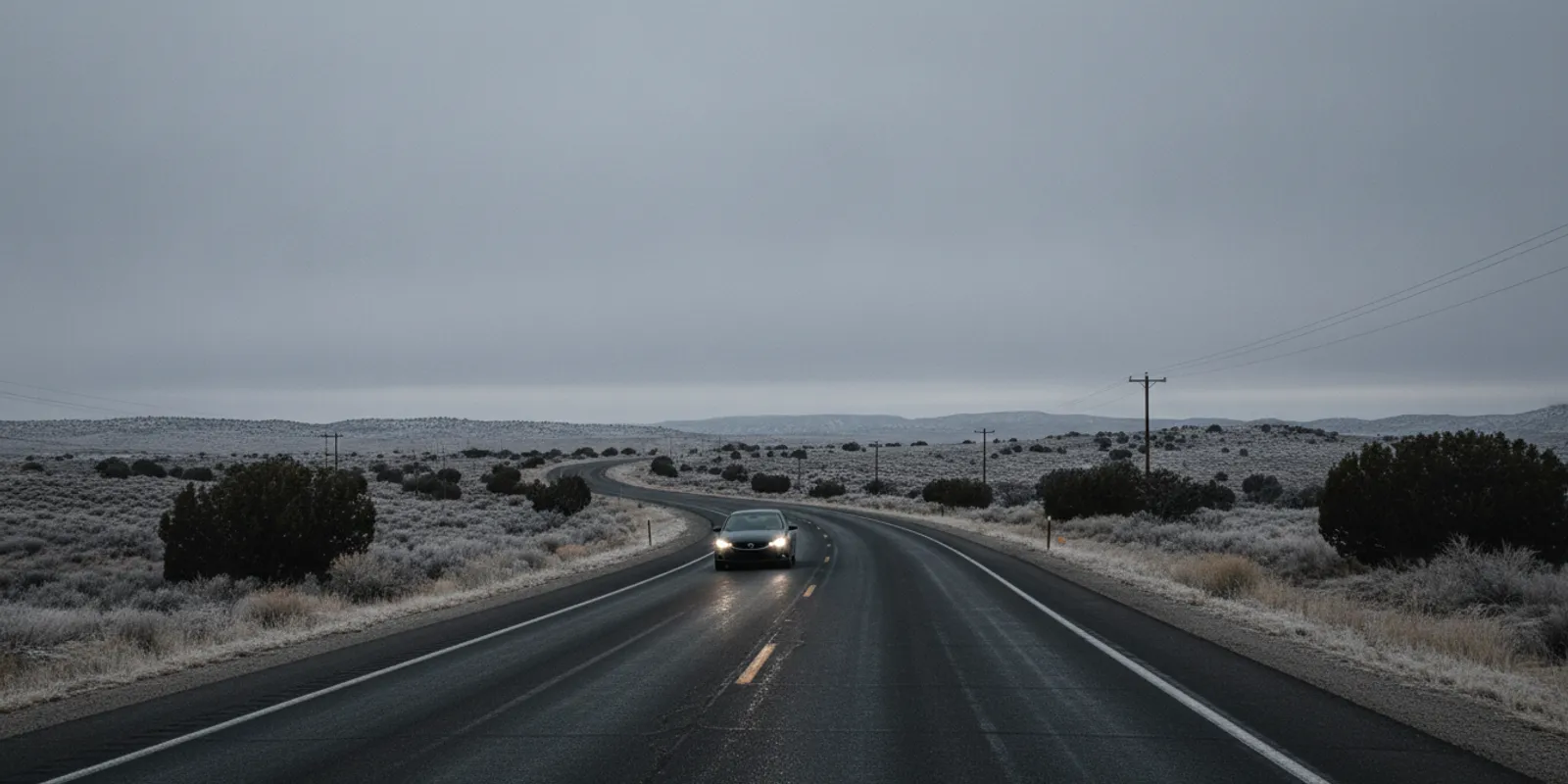
Black ice is a thin, often transparent layer of ice that can form on pavement. Drivers may see what looks like wet pavement, then lose traction without warning. Conditions can vary over a short distance. A shaded curve, bridge, overpass, or low area may be icy while a nearby sunny stretch is merely damp.
That uncertainty matters because a crash does not answer the legal question by itself. A vehicle sliding may point to a slick surface, but it does not establish when the ice formed, whether a responsible person knew about it, or whether a safer response could have prevented the harm. Nor does a weather forecast alone prove that a particular road was icy at the relevant time.
A useful investigation separates several questions:
- Condition: Was ice present where and when the crash occurred?
- Notice: Who knew, or had a reasonable opportunity to learn, about the hazard?
- Response: Were warnings, treatment, or other precautions reasonably available?
- Causation: Did the ice contribute to the collision and resulting injuries?
- Other causes: Did speed, visibility, following distance, vehicle condition, or another factor also play a role?
Responsibility may involve a driver, a public agency, a private property or road operator, or more than one party. The right answer depends on the location, the evidence, and the duties that apply to the people or entities involved. A driver losing control on ice does not automatically establish fault by someone else. In the same way, winter weather does not automatically excuse every action that contributed to a collision.
For example, a crash at a shaded bridge entrance raises different questions than a spinout in an open parking lot. The bridge may be maintained by a transportation agency, while a shopping center lot may be controlled under a private maintenance arrangement. Even within one road segment, the icy patch, warning sign, and point of impact may fall under different maintenance responsibilities. Pinning down the precise place is an early practical step, not a minor detail.
What evidence can show whether black ice was present?
The strongest picture usually comes from several independent sources that place conditions at the crash location and time. Start with immediate observations, then preserve records that can be lost, overwritten, or changed. Build a timeline with the crash time, the last time someone saw the road clear, weather changes, reports of ice, and any treatment or warning activity.
Photographs and video from the scene
If it is safe, take photographs or video before vehicles, road treatment, or changing weather alter the scene. Capture the road surface from several angles and distances. Include the full roadway, lane markings, nearby signs, shoulders, slopes, curves, bridges, trees, and structures that may shade the pavement.
Close-up images can show a sheen, frost, tire marks, or areas where water has refrozen. Wider views help identify where vehicles were traveling and whether one part of the roadway differs from another. Record the time and location, and keep original files. Do not step into traffic or delay emergency care to collect evidence.
Try to document the approach to the suspected patch as well as the impact area. A picture facing the direction of travel may show whether a driver had a clear view, whether a warning sign was visible, or whether a curve or rise blocked the sightline. If you return later, label those images with the later date. Do not present a later photograph as proof that the surface looked identical at crash time.
Dashcam, traffic-camera, business-security, or nearby residential footage may reveal what the road looked like shortly before impact. Video can disappear when systems record over old files. Note possible cameras quickly and ask the owner or responsible agency to preserve footage. Do not assume it will remain available until an insurance investigation begins.
Weather and pavement information
Weather records can help establish whether freezing temperatures, precipitation, melting snow, or a rapid temperature change occurred near the crash. Useful details include the time and location of observations, not simply a general forecast for a city. Conditions at an airport or weather station may differ from a shaded road several miles away.
Look for the timing of rain, snow, freezing drizzle, or earlier melting. Water can run across pavement and freeze after the air temperature drops. Sunset, shade, wind, elevation, and pavement exposure can help explain why ice formed in one location. These facts provide context, but they do not independently establish the exact surface condition at the collision point.
Preserve weather alerts, official observations, and road-condition updates that mention the relevant route. An attorney or investigator may compare those records with photographs, witness accounts, and maintenance logs. Keep a note of where each record came from and when you obtained it. If two sources give different readings, save both and note their locations rather than choosing the one that seems more favorable.
Witness accounts and statements
Witnesses may have seen the road before the collision, watched another vehicle lose traction, or noticed repeated sliding at the same spot. Obtain names and contact information when possible. Ask each person to describe what they personally observed, including the time, direction of travel, visibility, and exact location.
Statements made soon after a crash can be useful, but avoid turning a guess into a fact. A witness who says the road looked wet may not know whether it was ice. A driver who says “I hit ice” is reporting an impression, not necessarily identifying how the ice formed or who could have addressed it. Preserve the original wording and test it against other evidence.
Separate firsthand observations from conclusions when making your own notes. “The rear of the car moved left as it entered the shaded curve” describes an observation. “The road crew failed to treat the curve” is a conclusion that needs supporting information. This distinction helps preserve the detail without overstating what any witness could know.
Police, medical, and vehicle records
Request the crash report and keep any incident number, photographs, citations, and exchange-of-information documents. A report may record weather, road conditions, witness statements, and initial observations. It is one source, not a final ruling on legal responsibility. Correct or clarify errors through the appropriate process, and retain your own dated account of what you remember.
Medical records document injuries and the treatment timeline. Keep discharge instructions, appointment details, bills, and notes about symptoms. Do not delay care while trying to prove the road was icy. Prompt medical attention supports your health and creates a record of injuries after the collision.
Vehicle damage, tire condition, electronic data, and repair records may help explain how the collision unfolded. Preserve the vehicle in its post-crash condition when practical, particularly if serious injury or a disputed cause is involved. Speak with an attorney before authorizing destructive inspections or repairs when possible. Do not assume every vehicle has a data recorder or that it captured the event you need.
The Congressional Research Service explains that event data recorders may be used to help understand why a crash occurred and evaluate driver actions. Its overview of passenger-vehicle “black boxes” is general background, not proof that a particular vehicle recorded useful data. If the vehicle may contain relevant information, identify its make, model, year, and post-crash location promptly.
Could road warnings or maintenance records matter?
Yes. Where the crash occurred can shape what records exist and who may have been responsible for monitoring or treating the roadway. An investigation should identify the exact location, then determine which public agency, private owner, contractor, or other operator had control over that area. Do not assume that the nearest city, county, or state agency maintained every road segment.
Records worth identifying may include:
- Patrol logs, road-condition inspections, and hazard reports.
- Dispatch calls and complaints made before the crash.
- Snow or ice treatment routes, service logs, and material records.
- Work orders, contractor instructions, and maintenance schedules.
- Temporary warning signs, electronic message-board records, and closure notices.
- Policies identifying how the operator responds to freezing conditions.
These records can help establish when an operator learned of a hazard, what actions it took, and whether the response matched the circumstances. A missing treatment entry does not by itself prove negligence. A treatment record does not necessarily show the hazard was fully addressed. Timing, location, procedure, and outcome all matter.
For example, a log stating that a crew treated a route at dawn should be compared with the crash time, the exact road segment, and the weather after treatment. A record for a nearby highway may not establish that a particular ramp or bridge was inspected. The investigation may also ask whether a call about ice arrived before the crew passed the location, and what the response procedures called for under those conditions.
For a private road, parking area, or driveway, relevant evidence may include inspection routines, maintenance agreements, incident reports, and communications about recurring icy areas. The party controlling the area may not be the property owner. Leases, contracts, and site practices can help identify who handled maintenance. A premises claim involving an icy walkway or lot may call for a different factual inquiry than a crash on a public travel lane; see the firm’s information about slip-and-fall and premises liability matters.
Preservation requests should identify the place and time with enough detail to help the recipient find the material. Specify the route, direction, nearest cross street or landmark, approximate time window, and types of records or video at issue. Keep a copy of the request and any response. A request does not guarantee that records exist or will be produced, but it creates a clear record of what was sought.
Public-entity claims can involve special notice rules, deadlines, and legal defenses. Those rules may differ from claims involving private parties. Do not rely on a general injury deadline to decide how long you have to act. Have a New Mexico attorney assess the correct defendant and applicable deadlines promptly.
How might responsibility be shared?
There is no single rule that resolves every icy-road collision. The facts may point to more than one contributing cause. A driver may have traveled too fast for visible conditions, followed too closely, or failed to respond to a warning. Another party may have had responsibility for a known hazard or for maintaining a specific area. A vehicle issue or sudden change in conditions may also be relevant.
New Mexico applies comparative-fault principles in injury cases. In general terms, evidence about each party’s conduct can affect how responsibility and recoverable damages are assessed. The precise legal effect depends on the claims and facts. A person’s presence on an icy road does not, by itself, answer whether that person acted reasonably under the conditions. The firm’s overview of comparative fault in New Mexico car accidents provides related context.
For example, evidence that a driver was traveling below the posted speed does not automatically show the speed was safe for the conditions. But a sudden, concealed patch of ice may be difficult to anticipate even for a careful driver. Investigators may compare speed, braking, visibility, traffic, tire marks, warnings, and the road’s surface at the relevant time.
Consider a driver who approaches a shaded curve at a speed that seems reasonable on a dry road. A witness reports seeing two vehicles slide at the same point. A nearby camera shows the pavement appearing wet, but not clearly icy. Maintenance records show a patrol reported slick conditions earlier, while treatment records do not clearly identify the curve. Those pieces together may prompt additional questions; none alone resolves responsibility.
Do not accept an insurer’s early allocation of fault as a complete investigation. Ask what evidence supports it. If an adjuster attributes the crash only to weather, ask whether the company considered the roadway condition, available warnings, prior reports, and maintenance responsibilities. Keep communications factual and avoid speculation before evidence is reviewed.
Fusion Legal Group provides personal injury representation in New Mexico, including motor vehicle injury matters. Review the firm’s personal injury practice and its information about New Mexico car accident claims. The facts of an individual crash still need a case-specific review.
What should you do after a suspected black ice crash?
Take practical steps that protect people first and preserve evidence second. If you are able, use this checklist:
- Get to a safe place and call for help. Contact emergency services when anyone may be injured or the roadway remains dangerous. Do not stand in traffic to photograph the scene.
- Seek medical care. Follow medical advice and keep records of treatment, symptoms, and missed activities.
- Record what you observed. Note the time, route, direction, lighting, weather, road surface, and anything you saw before and after impact. Separate direct observations from assumptions.
- Photograph safely. Capture the road, vehicles, signs, sightlines, and surrounding features if conditions allow. Save original files and make a backup.
- Identify witnesses and cameras. Collect contact details and note camera locations. Promptly request that footage be preserved.
- Keep relevant documents. Save the crash report, insurer letters, repair estimates, medical records, receipts, and messages about the incident.
- Avoid public speculation. Do not post assumptions about fault or give a recorded insurer statement without understanding what is being requested. Be truthful, and consider legal guidance before making detailed statements.
- Get advice about deadlines. A consultation can help identify possible parties, evidence that may disappear, and any notice requirements that may apply.
Make a simple evidence log as you collect material. For each item, record what it is, who supplied it, when you received it, and whether it is an original or a copy. Keep original photo and video files in their native format, and store a backup somewhere separate from the device. Avoid editing or annotating the only copy; make a working copy if you need to mark up an image.
The firm’s after-a-car-accident checklist offers additional practical steps. If another vehicle left before you could identify its driver, the circumstances may call for a different evidence plan; see information on New Mexico hit-and-run crashes. For help organizing a consultation, the firm also provides a free case evaluation page.
Which evidence should be prioritized?
| Evidence | What it may help show | Practical next step |
|---|---|---|
| Scene photos or video | Surface appearance, location, visibility, signs, and nearby road features | Save original files and record when and where they were taken |
| Weather and road-condition records | Whether freezing conditions were plausible at the time and place | Note the source, timestamp, route, and geographic coverage |
| Witness accounts | What others observed before, during, or just after the crash | Collect contact information and preserve their own words |
| Maintenance and dispatch logs | Prior notice, inspections, treatment, warnings, or response timing | Identify the road operator and request preservation promptly |
| Crash and medical records | Initial observations, injury timing, and treatment | Request copies and keep a dated record of follow-up care |
| Vehicle and electronic evidence | Damage, braking, movement, or other crash details when available | Preserve the vehicle and consult before destructive inspection |
No single item necessarily proves liability. Evidence is more useful when it fits together: a witness saw repeated sliding, a camera shows the affected patch, weather records show freezing conditions, and maintenance logs reveal what the road operator knew. Contradictions should also be examined rather than ignored.
Prioritize evidence based on how quickly it may disappear. Scene conditions can change in minutes. Video may be overwritten on a routine schedule. Medical and repair records can be requested later, but the vehicle may be repaired or sold. Write down what could vanish first, who controls it, and what specific preservation step may be possible.
How can a lawyer evaluate a black ice claim?
A lawyer can help identify the road’s controlling agency or property operator, preserve time-sensitive records, and assess how the evidence fits the applicable law. In some cases, an investigation may involve a site inspection, witness interviews, records requests, or qualified experts. The need for any step depends on injury severity, disputed facts, and available evidence.
A focused review often begins by mapping the crash location and building a timeline. The reviewer can compare weather observations, camera timestamps, witness accounts, police notes, and maintenance records. If records conflict, follow-up may be needed to determine whether timestamps use the same time zone, whether a report refers to the same road segment, or whether a later event changed the surface.
Bring what you have, even if it is incomplete. Useful items include the crash report number, photographs, insurer correspondence, medical documents, witness information, and a short timeline. Tell the lawyer what you know directly and what you only suspect. That distinction helps shape follow-up questions without turning an early theory into an assumed fact.
Fusion Legal Group is a veteran-owned personal injury firm based in Albuquerque and serves people across New Mexico. Learn about the firm’s legal team or explore its personal injury practice areas. The firm states that it uses a contingency fee model, but terms and fit for any matter should be discussed directly.
Contact Fusion Legal Group to discuss your crash
Frequently asked questions
Does black ice automatically make another party responsible?
No. Ice may explain why a vehicle lost traction, but responsibility depends on additional facts. The investigation may consider who controlled the road, whether anyone had notice of the hazard, what precautions were available, and how each driver responded to the conditions.
Can a driver be held responsible for a crash on black ice?
Possibly. Drivers still need to respond reasonably to conditions they can see or should anticipate. Speed, following distance, visibility, warnings, and the suddenness of the hazard may all matter. A driver’s conduct should be evaluated in context rather than judged only by the fact that a collision occurred.
What if the ice formed shortly before the crash?
Timing can be important. A newly formed, concealed patch may leave little opportunity for a road operator or driver to respond. Weather records, time-stamped images, witness observations, and maintenance or dispatch logs may help establish when the hazard appeared and whether anyone could have discovered it sooner.
How long do I have to make a New Mexico claim?
Deadlines can depend on who may be responsible and the type of claim. Claims involving a public entity can have additional notice requirements. Do not assume the ordinary filing period applies to every situation. Seek prompt advice so a lawyer can identify applicable deadlines based on the facts.
What if I have no photographs of the ice?
A claim may still be investigated through witnesses, video, weather observations, police records, vehicle evidence, and maintenance documents. Write down what you remember while it is fresh, including the exact location and what the surface looked like. Preserve records and identify potential cameras as soon as possible.
Sources and further reading
The National Transportation Safety Board report on a multivehicle crash in icy conditions describes an investigation of a specific crash. It is an example of how investigators can examine roadway and crash circumstances; it does not determine responsibility under New Mexico law.
When black ice may have contributed to a New Mexico crash, a careful record of the road, timing, warnings, witnesses, and maintenance response can help clarify what happened. Preserve what you can safely and get advice promptly when injuries or possible public-entity responsibility are involved.

Anthony Spratley is the founder and managing attorney of Fusion Legal Group, a veteran-owned personal injury law firm serving clients throughout New Mexico. A retired U.S. Air Force Judge Advocate General (JAG) officer with 24 years of military service, Anthony has been licensed to practice law in New Mexico since 2003 and is admitted to the U.S. District Court, District of New Mexico. He has handled 350+ cases across personal injury, criminal defense, and family law—bringing battle-tested discipline to every client’s case. Anthony is a first-generation college graduate, a father of five, and a youth sports coach in Albuquerque.