
New Mexico electrocution accident lawyer: Next Steps

An electrical accident can leave little visible damage while causing serious harm inside the body. A shock, arc flash, or contact with exposed wiring may affect the heart, muscles, nerves, brain, or eyes. A fall after the contact can add fractures or other traumatic injuries.
Request a free consultation about an electrocution injury
A New Mexico electrocution accident lawyer can help you evaluate medical records, preserve evidence, identify potentially responsible parties, and understand possible compensation after an electrical injury. The legal path depends on where the incident happened, who controlled the hazard, and whether workplace, property, contractor, product, or utility issues are involved.
Do not dismiss an injury because a burn appears small. MedlinePlus explains that electrical burns can conceal serious internal damage, including harm to the heart, muscles, or brain: learn more about electrical injuries. Understanding why prompt medical evaluation matters is the first step toward protecting your health and preserving the facts needed to assess what happened.
What Is an Electrical Injury and Why Does Prompt Care Matter?
An electrical injury occurs when an electrical current damages the skin or internal organs after direct contact. The injury may involve more than a visible burn. Electricity can affect the heart, muscles, nerves, brain, and other tissues. A person may also suffer a fall, an arc-related eye injury, or trauma from an electrical blast. MedlinePlus explains the range of injuries that electrical contact can cause.
The appearance of the skin does not reliably show the extent of the harm. A small-looking burn can exist alongside serious internal damage. Electrical contact may affect the heart, destroy muscle or nerve tissue, or create breathing problems. It can also cause changes in alertness, irregular heartbeat, muscle spasms, pain, numbness, or tingling. These symptoms require medical attention rather than home observation.
Why symptoms may be delayed
Electrical energy can travel through the body before leaving through another contact point. The current’s path, strength, duration, and the person’s overall health can affect the injury. In addition, the harm may be thermal, electrical, or mechanical. A fall or forceful muscle contraction may create injuries that are separate from the burn itself.
Medical literature recognizes that electrical injuries can have occult or delayed effects on body systems. The PubMed review on electrical injury mechanisms and delayed effects describes complications that may not be obvious immediately. Prompt evaluation gives clinicians an opportunity to assess potential heart, breathing, neurological, tissue, and trauma concerns. It also creates an early record of what happened and what care was recommended.
If you or someone with you has experienced electrical contact, call emergency medical help when appropriate and follow the responder’s instructions. Do not assume that feeling better or having only a surface mark means the danger has passed. A medical evaluation can help identify concerns that are not visible and guide the next safe step.
What To Do After an Electrocution Accident in New Mexico
An electrical emergency can remain dangerous after the visible contact ends. Focus first on making the scene safe and getting medical help. Do not put yourself at risk while trying to rescue someone else.
- Look before you touch. If the person may still be touching an energized source, do not touch the person. The electrical current may pass through the victim and into the rescuer. If you can safely shut off the current, do so. Be cautious because switching off an appliance may not stop the flow of electricity. The CDC explains these electrical-hazard precautions.
- Stay away from high-voltage hazards. Do not attempt to rescue someone near active high-voltage lines. Keep a safe distance and wait for trained emergency responders. A rescue attempt around a high-voltage source can create another serious injury.
- Call 911 or emergency medical help. Ask someone nearby to call if you are assisting from a safe location. The CDC recommends emergency medical help after a suspected electric shock. Prompt evaluation matters because electrical shock can cause burns inside the body, even when external injuries appear limited.
- Move the source only if it is clearly safe. When appropriate, a non-conducting object such as cardboard, plastic, or wood may help move the source away. Do not use an object or approach the scene if doing so could expose you to current, fire, water-related electrical danger, or high voltage.
- Check the person only after the electrical contact ends. Once the person is free from the source, check breathing and pulse and follow the emergency dispatcher’s instructions. Tell responders what happened, including whether the source involved a power line, appliance, workplace equipment, or another electrical system.
Medical care comes before legal decisions. Keep discharge paperwork, medical records, photographs, and incident details when it is safe to do so. After immediate needs are addressed, a New Mexico electrocution accident lawyer can evaluate your options based on the facts, injuries, and potentially responsible parties.
How Should You Preserve Evidence After Electrical Contact?
Once everyone is safe and emergency care is underway, preserve information without returning to an active electrical hazard. Exposed wiring, cords, appliances, machinery, power lines, and occupational equipment may help explain what happened. Do not touch, move, unplug, repair, or clean the source. A change intended to make a scene safer could also destroy evidence or create another injury risk.
If authorities, utility crews, property owners, or trained workplace personnel secure the area, ask who performed that work and when. From a safe location, record the date, time, address, weather or lighting conditions, and what you observed before the scene changed. Take photographs or video only when doing so does not bring you near energized equipment. Wider images can show the surrounding area, while closer images should be taken only after the hazard has been professionally isolated.
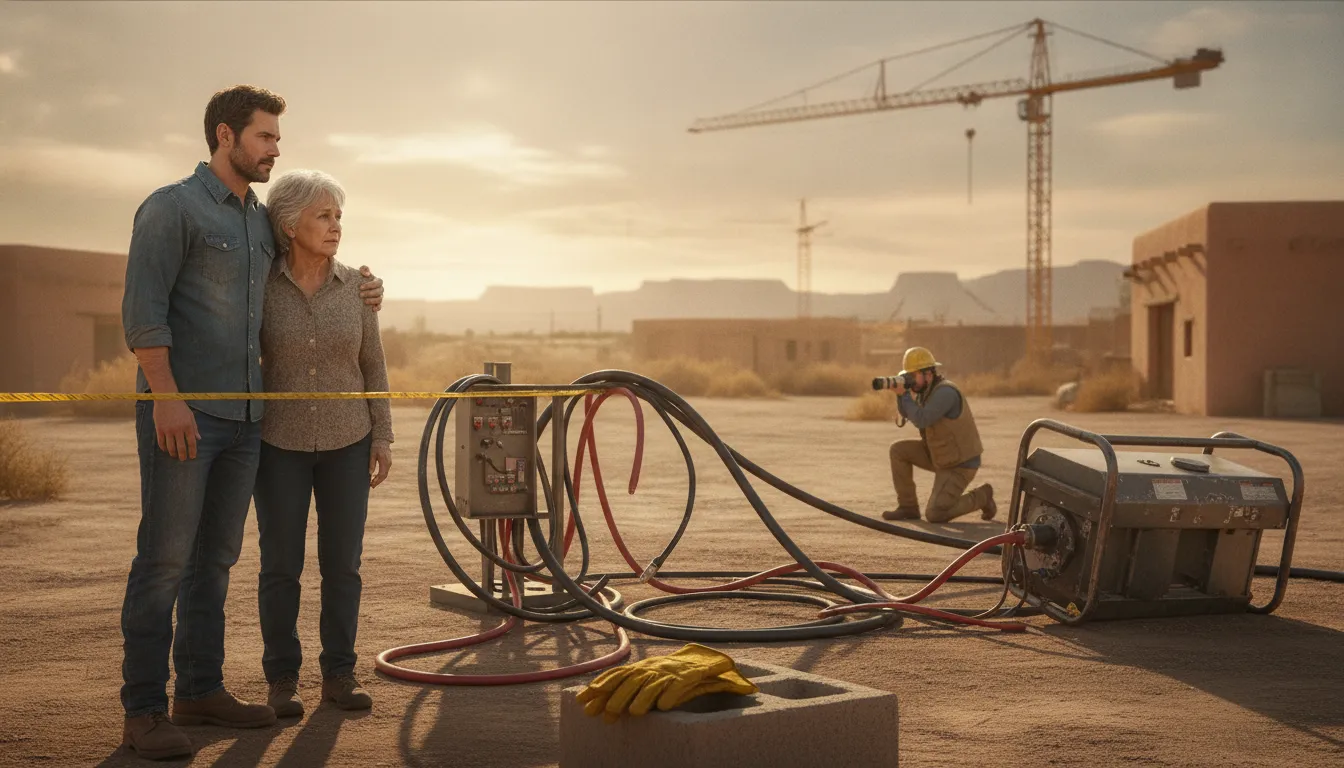
Record the people, reports, and equipment involved
Write down the names and contact information of witnesses while their memories are fresh. Ask them to describe what they personally saw, without coaching or asking them to guess about the cause. Keep copies of incident reports, employer notifications, property-owner communications, inspection records, work orders, photographs, video, and any messages about the condition that preceded the contact.
Do not discard clothing, footwear, protective equipment, tools, or damaged personal property. Store items as they are, preferably in a clean, dry location, and tell a lawyer or investigator before sending equipment for repair or disposal. If the incident involved a consumer product, preserving the product and its packaging may be important when evaluating New Mexico product liability claims. Workplace incidents may also require a careful review of construction electrocution injury hazards, even when the incident was not limited to a construction site.
Keep a complete medical record
Save emergency records, diagnostic results, discharge instructions, prescriptions, bills, referral notes, and follow-up records. Tell medical providers exactly what happened, including whether contact was brief or prolonged. What type or strength of current may have been involved, and how electricity may have traveled through the body. These details matter because injury severity can depend on current type and strength, duration, the current’s path, and overall health. A New Mexico electrocution accident lawyer can use the preserved record to help evaluate what happened and which parties may require further investigation.
Who May Be Liable for an Electrocution Injury?
Responsibility after electrical contact depends on what happened, where it happened, who controlled the hazard, and what the evidence shows. An employer, property owner, product maker, contractor, utility, or another party may be relevant, but a label alone does not establish liability. A careful review may consider inspection records, safety procedures, maintenance history, product evidence, witness accounts, and medical documentation.
| Potentially responsible party. | Questions an investigation may examine. | Evidence that may matter. |
|---|---|---|
| Workplace or employer. | Did the employer control the work, provide training, maintain equipment, or know about an electrical hazard? | Incident reports, training records, safety policies, work assignments, inspection logs, and statements from coworkers may help establish what occurred. |
| Property owner or occupier. | Was the hazard on property the owner or occupier controlled? Did that party know, or should it have known, about unsafe wiring, equipment, or access? | Maintenance records, prior complaints, photographs, leases, repair requests, and the condition of the premises may be relevant. |
| Equipment or product maker or seller. | Did a defective design, manufacturing problem, warning, instruction, or electrical component contribute to the injury? | Preserving the product, packaging, purchase information, manuals, service records, and photographs can be important. Learn more about defective electrical product liability. |
| Contractor, utility, or other third party. | Did a contractor perform unsafe work, did a utility control a relevant line or connection, or did another business or person create or fail to address the hazard? | Permits, work orders, utility records, contracts, site photographs, expert analysis, and communications may help clarify each party’s role. |
Electrical injuries can involve thermal, electrical, and mechanical mechanisms, including burns or injuries caused by a fall. That means the investigation should not stop at the visible injury or the first explanation offered at the scene. If the incident involved a job site, reviewing New Mexico construction accident claims may provide useful context, while the separate legal analysis must remain specific to the facts.
Do not alter, discard, repair, or return potentially involved equipment before it can be documented and evaluated. Liability may involve more than one pathway, or the available proof may point away from a particular party. A New Mexico electrocution accident lawyer can help organize the evidence and assess which theories, if any, fit the incident.
What Damages Can an Electrical Injury Claim Involve?
The effects of electrical contact can extend beyond a visible mark on the skin. Electrical injuries may involve thermal, electrical, or mechanical harm, including burns, falls, and other trauma. Some effects can be occult or delayed, so the appropriate damages analysis depends on the injury, medical evidence, and how the incident affected daily life.
Medical care and physical effects
Depending on the circumstances, a claim may involve emergency evaluation, hospitalization, treatment for burns, follow-up care, medication, rehabilitation, or other recommended medical services. Medical records can help document symptoms and treatment over time. Possible effects include irregular heartbeat, breathing problems, seizures, muscle spasms, pain, numbness, tingling, and broken bones. These symptoms do not establish a legal claim by themselves, but they show why an individualized medical and legal evaluation matters. The CDC warns that electrical shock may cause burns inside the body, which is one reason prompt medical care is important: CDC electrical safety guidance.
Where supported by the evidence, damages may also account for future treatment, reduced physical function, scarring, nerve effects, muscle effects, or limitations on ordinary activities. A New Mexico burn injury claim may involve related questions about treatment and lasting scarring, but every electrical injury must be evaluated on its own facts.
Income, pain, and family impact
If an injury prevents someone from working, damages may potentially include documented lost income. A serious or lasting impairment may also affect future earning capacity, depending on medical and vocational evidence. Pain, emotional distress, disfigurement, and the loss of ability to participate in family or household activities may be relevant in some cases.
Family members may face practical caregiving responsibilities or changes in household services when an injury is severe. Those effects should be documented rather than assumed. Because severe injuries can affect several parts of a person’s life, reviewing records with a New Mexico personal injury attorney can help identify which categories may be supported.
How a New Mexico Electrocution Accident Lawyer Evaluates a Claim
A consultation review starts with what happened, what injuries followed, and what evidence can still be preserved. A direct attorney review can help organize the facts without assuming that every electrical injury follows the same legal path.
Medical records and the incident account
The review may begin with emergency records, diagnostic testing, treatment notes, work restrictions, and information about ongoing symptoms. The attorney may also ask for a clear account of the event: where the contact occurred. What the person was doing, whether anyone saw it, and what happened immediately afterward. Photographs, incident reports, messages, and witness contact information can help place those facts in context.
Source, equipment, and location
Investigation may focus on who owned, supplied, installed, inspected, or controlled the electrical source and equipment. The legal analysis can change depending on whether the incident occurred at a jobsite, on private property, or in another setting. Workplace status, premises conditions, employer records, contractor relationships, and safety instructions may all matter. For an oilfield or similar workplace incident, our guide to New Mexico workplace accident claims provides related context.
The review may also examine whether a product defect, inadequate warning, installation problem, maintenance failure, or third-party action contributed to the injury. That requires preserving the equipment and identifying the product chain, including manufacturers, distributors, contractors, and other responsible parties. Do not repair, discard, or alter potentially important equipment before receiving guidance.
Timing and next steps
Timing can affect evidence collection, notice requirements, records, and the available legal options. A lawyer will need to identify important dates, including the incident, medical treatment, reports, employment actions, and communications with insurers or property owners. Because deadlines and claim procedures can depend on the facts, an early review is safer than relying on a general assumption.
Fusion Legal Group serves clients throughout New Mexico, including Albuquerque, Rio Rancho, Santa Fe, Los Alamos, Los Lunas, and Las Cruces. Direct attorney involvement supports careful preparation for settlement or trial, while the facts determine what options may be available. Request a free consultation to discuss the incident and next steps.
Contact Fusion Legal Group about your electrocution injury
Frequently Asked Questions
Should I seek medical care if an electrical injury looks minor?
Yes. Electrical burns can appear minor while hiding damage to the heart, muscles, or brain, and electrical contact can cause effects that are not immediately obvious. Seek emergency care for serious symptoms, and follow a clinician’s instructions for evaluation and follow-up. MedlinePlus explains these risks.
What evidence should I preserve after an electrocution accident?
After everyone is safe, preserve photographs of the scene and equipment from a safe distance, medical records, incident reports, and the names of witnesses. Do not repair, discard, move, or alter equipment when doing so could destroy evidence. An attorney can help identify what records and physical evidence may matter.
Who might be responsible for an electrical injury in New Mexico?
Potential liability depends on how the incident happened and who controlled the hazard. Depending on the facts, an investigation may examine an employer, property owner, contractor, utility, equipment manufacturer, or another responsible party. Evidence about maintenance, warnings, work practices, and the electrical source helps determine which legal pathways may apply.
What damages may an electrical injury claim involve?
Potential damages can include medical treatment, future care, lost income, reduced ability to work, pain, scarring, and the effects of nerve, muscle, heart, or other injuries. A fall after electrical contact may also cause fractures or other trauma. Eligibility and value depend on the medical evidence, liability proof, and individual circumstances.
When should I speak with a New Mexico electrocution accident lawyer?
Consider seeking legal guidance after urgent medical needs are addressed, especially if the injury involved a workplace, property condition, power line, machinery, or suspected defective product. A consultation can help organize records, identify potential responsible parties, and explain next steps without promising a particular outcome.
Contact Fusion Legal Group About an Electrocution Injury
After an electrical injury, a focused conversation can help you understand which records, incident details, and liability questions may matter to your situation. Fusion Legal Group can discuss your concerns and explain potential next steps based on the available facts. Request a free consultation through the firm’s contact form to get started.

Anthony Spratley is the founder and managing attorney of Fusion Legal Group, a veteran-owned personal injury law firm serving clients throughout New Mexico. A retired U.S. Air Force Judge Advocate General (JAG) officer with 24 years of military service, Anthony has been licensed to practice law in New Mexico since 2003 and is admitted to the U.S. District Court, District of New Mexico. He has handled 350+ cases across personal injury, criminal defense, and family law—bringing battle-tested discipline to every client’s case. Anthony is a first-generation college graduate, a father of five, and a youth sports coach in Albuquerque.