
After an off-road crash, a focused review can clarify who may be responsible, what insurance may apply, and which New Mexico rules matter. ATV and off-road vehicle accidents in New Mexico often involve riders, passengers, bystanders, owners, land managers, or businesses, so early evidence preservation is important.
Contact Fusion Legal Group for a free consultation
ATV and off-road vehicle accidents in New Mexico require a fact-specific review of liability, land-use rules, insurance, medical evidence, and losses. New Mexico defines an off-highway motor vehicle as one used exclusively off state highways and not legally equipped for highway operation, according to the New Mexico Motor Vehicle Division.
- Get medical care and report the incident to the appropriate authority.
- Photograph the scene, vehicle, protective equipment, and visible injuries when safe.
- Preserve witness information, rental records, insurance documents, and damaged gear.
- Consider legal guidance before giving a recorded statement or signing a release.
Because an accident may involve a rollover, dangerous property, negligent supervision, or an equipment defect, preserving evidence matters. These differences identify the parties, records, and policies that deserve examination.
What Makes ATV and Off-Road Vehicle Accidents in New Mexico Legally Different?
ATV and off-road vehicle crashes do not always fit the familiar pattern of a two-car collision. Location, vehicle design, land rules, insurance, and the parties’ relationships can change the investigation. A rider, passenger, pedestrian, property owner, or another driver may have a different role in the claim.
What counts as an off-highway vehicle?
New Mexico uses a specific statutory definition. Under Section 66-1-4.13(B), an off-highway motor vehicle is used exclusively off state highways and is not legally equipped for highway operation. The definition can include an ATV, utility terrain vehicle, dirt bike, or another off-road vehicle. The New Mexico Motor Vehicle Division provides related off-highway motor vehicle guidance.
Why the people and setting matter
In an ordinary auto claim, investigators often begin with roadway rules, traffic signals, vehicle damage, and driver conduct. An off-road case may require a broader inquiry. The crash could occur on public land, private property, a commercial riding area, or an informal trail. Evidence may include posted rules, permission to enter, trail conditions, ownership records, maintenance history, and intended use.
The injured person’s identity also matters. A negligent operator may be evaluated differently when the injured person was a passenger, bystander, or another rider. An owner who allowed someone else to operate the vehicle may become relevant. A landowner, event operator, manufacturer, retailer, or other driver could also require review. These possibilities do not establish liability, but they show why early investigation matters.
Why evidence can make the difference
Many serious ATV injuries arise without contact with another motor vehicle. A Centers for Disease Control and Prevention review reported that many ATV-related fatalities involved single-vehicle crashes, including overturns, falls, and fixed-object impacts. There may be no traffic citation or opposing driver’s insurance claim to explain what happened. Scene photographs, vehicle photographs, witness accounts, and medical documentation may carry significant weight.
New Mexico’s comparative fault rule may matter when multiple people or conditions contributed to an injury. Preserve records and identify witnesses promptly.
How New Mexico Rules Affect an Off-Road Vehicle Injury Claim
New Mexico law can shape an off-road injury claim before anyone evaluates insurance or damages. The vehicle’s classification, registration, crash location, and each person’s conduct may matter. Document these details early. A public-land trail may involve different records and land-use rules than private property.
Registration and the definition of an OHV
New Mexico defines an off-highway motor vehicle as one used exclusively off state highways and not legally equipped for highway operation. The state’s motor vehicle guidance can include ATVs, dirt bikes, and other off-road vehicles. Classification helps identify which requirements and records apply.
Unless an exemption applies under the Off-Highway Motor Vehicle Act, a person may not operate an OHV unless it has been registered. That rule appears in New Mexico Motor Vehicle Division guidance. Registration does not establish who caused a crash. An unregistered vehicle does not resolve every liability question, but it may help investigators examine ownership, operation, and compliance.
Where the crash happened can change the investigation
Public trails, recreation areas, county land, and private property may each have different access conditions and operating requirements. A land manager may maintain permits, incident reports, trail rules, or other records. On private land, permission and the relationship between rider and owner may matter. An invitation, rental arrangement, or dangerous condition can point an investigation in different directions.
Do not assume a trail was open because other vehicles used it. Preserve photographs of signs, gates, barriers, terrain, lighting, and the vehicle’s location. The New Mexico Department of Game and Fish provides OHV laws and rules information. Confirm the applicable rule with the land manager. Conditions can change over time.
Safety equipment, age, and minors require careful review
Helmet, training, passenger, and age issues can matter, but they should be analyzed from the actual facts rather than assumptions. The vehicle type, rider’s age, location, equipment, posted rules, and circumstances of the operation may affect the analysis. A child passenger or rider can also raise questions about supervision, permission, and negligent entrustment. The investigation may ask whether an adult provided a vehicle inappropriate for the child’s experience or age.
A safety-rule violation is not automatically the same as legal responsibility for every injury. It may become one fact among many, including speed, visibility, mechanical condition, warnings, alcohol or drug involvement, and the conduct of other drivers or landowners. Keep the helmet and other protective equipment, even if damaged, and avoid discarding or altering vehicle parts before they can be examined.
Comparative fault may affect the claim
New Mexico may evaluate the conduct of multiple people when deciding responsibility for an injury. A rider’s actions, another person’s operation of an OHV, a landowner’s conduct, or a manufacturer’s alleged defect may all require separate analysis. Comparative fault does not mean an injured person should assume a claim is unavailable. It means the evidence should be developed carefully and each person’s contribution should be assessed under the facts.
For a broader explanation of how allocation of responsibility may affect an injury case, review the New Mexico comparative fault rule. Preserve medical records, photographs, witness information, rental or ownership documents, messages, and any report made to a land manager or law enforcement agency. Those materials can help counsel distinguish an unfortunate accident from conduct that may support a legal claim.
Who May Be Responsible for an ATV Crash?
Responsibility after an ATV or UTV collision is not always limited to the person operating the vehicle. Investigators typically examine how the crash happened, who controlled the vehicle or property, and whether a preventable hazard or defect contributed to the injuries. In a claim involving ATV and off-road vehicle accidents in New Mexico, more than one person or business may share responsibility.
The driver, owner, or person who provided the ATV
A driver may be responsible when careless operation caused the crash. Examples include excessive speed for the terrain, impaired driving, failing to watch for riders, ignoring trail conditions, or carrying passengers unsafely. The facts matter. Consider what the operator could see, which warnings were provided, and whether conduct violated a posted rule or safety requirement.
The vehicle owner may also become part of the investigation. A claim might involve negligent entrustment if an owner knowingly allowed an inexperienced, impaired, or otherwise unsafe person to use the ATV. That theory is fact-specific. It generally requires evidence about what the owner knew or reasonably should have known before handing over control. Ownership alone does not automatically establish liability.
Landowners and trail or recreation operators
Private landowners, event organizers, resorts, and commercial recreation operators may have responsibilities related to property conditions and activity management. Potential issues include an unmarked hazard, inadequate route separation, a poorly maintained trail, missing warnings, or an unsafe rental procedure. The legal duty can depend on the property, visitor status, warnings, access agreement, and activity involved.
Riding on public land does not mean every injury is automatically the government’s responsibility. Public-entity claims can involve additional rules, defenses, and notice requirements. A careful review should identify the land manager, applicable access rules, maintenance records, and any reports about the condition before the incident.
Rental companies, manufacturers, and maintenance providers
When an ATV is rented, responsibility may involve the rental company or another operator. Potential issues include inadequate instructions, a known mechanical problem, or poor maintenance. Rental contracts are important evidence, but their language does not answer every question.
A manufacturer, distributor, retailer, or repair provider may require investigation. A defective design, inadequate warning, faulty repair, or missed maintenance issue may contribute to a rollover or loss of control. Preserve the ATV. Do not authorize repairs, discard parts, or alter the vehicle before qualified investigators document its condition.
Another driver’s conduct and comparative fault
A collision with a car, truck, motorcycle, or another off-road vehicle may place responsibility on the other driver. Relevant evidence can include vehicle damage, debris, photographs, trail or road layout, witness statements, surveillance footage, and available vehicle or event records. Insurance coverage must be evaluated separately from fault.
New Mexico may assign responsibility among multiple parties based on the evidence, and an injured person’s own conduct may affect recovery under the circumstances. The result is not necessarily all-or-nothing. For a practical overview of how allocation may work, review the firm’s New Mexico comparative fault rule guide. Because the outcome depends on the facts and applicable law, avoid assuming that a warning, waiver, or alleged rule violation ends the analysis.
Evidence that can clarify responsibility
A prompt investigation may examine medical records, photographs, 911 materials, reports, witness contacts, communications, rental and ownership records, maintenance logs, warnings, and available electronic data. Keep damaged equipment and protective gear in post-crash condition. Preserve photographs before the scene changes. Counsel can help identify responsible parties while evidence remains available.
What Insurance May Cover an ATV or UTV Accident?
Insurance analysis after an off-road crash starts with the vehicle, the location, the people involved, and the language of every potentially relevant policy. An automobile policy may address a street-legal vehicle in some circumstances, while excluding an ATV, UTV, or other recreational vehicle when it is used off-road. A homeowners or renters policy may contain limited coverage for certain incidents, but it may also exclude motorized vehicles or injuries arising from their operation. The policy’s definitions and exclusions control the analysis.
New Mexico’s mandatory insurance rules also should not be treated as a complete answer to every ATV or UTV claim. The Motor Vehicle Division explains that the Mandatory Financial Responsibility Act applies to owners and operators of motor vehicles used on New Mexico streets and highways. Subject to statutory exemptions and conditions. That requirement is different from proving that a particular recreational vehicle policy, automobile policy, or liability policy covers a specific accident. An ATV used on private property or a designated trail may raise different questions than one driven on a public roadway.
| Coverage source | What to check | Why it matters |
|---|---|---|
| Automobile policy | Vehicle definition, residency, location of the crash, and motorized-vehicle exclusions | Roadway provisions may apply in some cases. Exclusions may limit coverage for an ATV or UTV. |
| Homeowners or renters policy | Recreational-vehicle exclusions, premises language, and liability conditions | The policy may address a property-related incident without covering operation of the vehicle itself. |
| Recreational-vehicle endorsement or policy | Named vehicle, authorized drivers, territory, use restrictions, and physical-damage terms | Specialized coverage may be more relevant, but only the actual policy determines its scope. |
| Medical-payments coverage | Who qualifies, whether the coverage follows the person or vehicle, and applicable exclusions | It may address certain medical expenses independently of fault, subject to policy terms. |
| Umbrella policy | Underlying-policy requirements, retained limits, and recreational-vehicle exclusions | Additional liability protection may depend on qualifying primary coverage and compliance with conditions. |
| Rental or commercial policy | Rental agreement, business use, authorized operators, and employer or vendor coverage | A rental company, tour operator, employer, or other business may have separate coverage issues. |
Coverage endorsements can add protection, but they can also impose conditions. Policies may distinguish owned and borrowed vehicles, authorized and unauthorized operators, recreational use, and commercial activity. A rental agreement may assign responsibilities without deciding whether an insurer must defend or pay. Commercial coverage may matter when a business supplied the vehicle, but that possibility requires investigation.
Preserve the complete policy, declarations page, endorsements, denial letters, rental documents, and communications with every insurer. Avoid relying only on an adjuster’s verbal summary. When an insurer requests a recorded statement or asks for a release, consider obtaining advice first. Fusion Legal Group’s guide to dealing with insurance adjusters explains practical steps for protecting your position while the facts and coverage questions are reviewed.
For people involved in ATV and off-road vehicle accidents in New Mexico, a useful coverage review compares possible policies with the crash evidence. It may include the owner, driver, passenger, landowner, rental company, employer, and other parties. Do not presume coverage or accept an exclusion without reading the policy and applying it to the facts.
Common Injuries and Evidence That Can Support Your Claim
An off-road crash can produce serious harm even without another vehicle. A rollover may throw a rider from the ATV. A collision, ejection, or terrain impact can affect several body areas. The Centers for Disease Control and Prevention identifies ATV injuries as a significant public health concern, especially in rural and agricultural areas. Its review found many fatalities involved single-vehicle crashes, including overturns, falls, and fixed-object impacts. See the CDC off-road vehicle injury information.
Potential injuries may include concussions, traumatic brain injuries, skull fractures, neck and spinal-cord damage, broken bones, dislocations, torn ligaments, and other orthopedic injuries. Riders and passengers may also experience soft-tissue injuries, such as sprains, strains, and whiplash. Blunt force can cause internal injuries that are not immediately obvious. Emotional effects, including anxiety, sleep disruption, or trauma symptoms, may also deserve medical attention. A prompt evaluation helps protect your health and creates a medical record connecting the reported symptoms to the crash.
Medical records should tell the full story
Keep records from emergency treatment, primary-care visits, specialists, physical therapy, diagnostic imaging, prescriptions, and follow-up appointments. Tell each provider how the incident occurred, where you hurt, and how symptoms affect work, sleep, driving, caregiving, or ordinary activities. Do not minimize symptoms because they appeared gradually. At the same time, avoid assuming every symptom has the same cause. Your treating providers can document the diagnosis, treatment plan, prognosis, and any need for continued care.
Preserve evidence from the scene and vehicle
If it is safe and physically possible, take photographs of the scene before conditions change. Useful images may show the trail or roadway, slopes, debris, lighting, weather, warning signs, property conditions, and visible damage. Identify witnesses and preserve their names and contact information while memories are fresh. Keep photographs of injuries as they heal, but do not return to a dangerous area to gather evidence.
Preserve the ATV or UTV in its post-crash condition. Do not repair, sell, modify, or discard it before it can be inspected. Maintenance records, recall notices, rental agreements, ownership documents, and service histories may help establish whether a mechanical problem or maintenance issue contributed to the event. If protective equipment was worn, preserve the helmet and other gear rather than cleaning or replacing it. Incident reports from property owners, event organizers, law enforcement, or emergency responders may provide additional details.
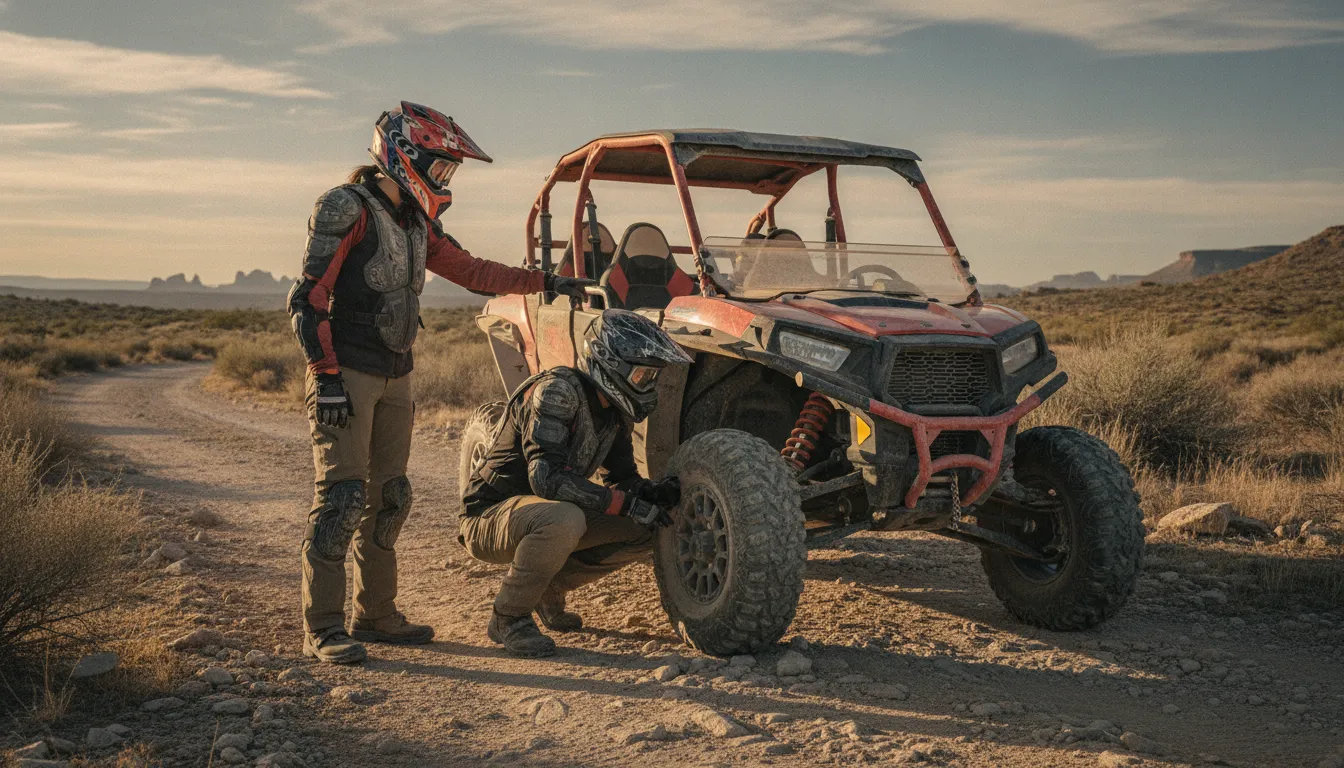
Organize these materials with medical bills, wage information, insurance communications, and a brief timeline of what happened. Fault may be disputed, including under New Mexico’s New Mexico comparative fault rule. A careful record gives an attorney a clearer basis to evaluate the crash, the injuries, and the available evidence.
What Damages Can an Injured Rider, Passenger, or Bystander Seek?
The losses after an off-road crash can affect health, work, transportation, family responsibilities, and daily independence. A damages analysis looks beyond the immediate emergency-room bill and considers how the injury changes a person’s life. The available categories depend on the evidence, the parties involved, the applicable insurance, and the facts that establish responsibility.
Medical care and future treatment
Compensable medical losses may include ambulance transportation, emergency care, hospital treatment, surgery, medication, diagnostic testing, rehabilitation, physical therapy, and follow-up appointments. Records should connect each service to the crash and show why the treatment was medically necessary. That documentation can matter when an insurer questions whether care was related to the accident.
Some injuries require continuing care after the initial claim begins. A rider may need additional procedures, therapy, assistive equipment, medication, or monitoring. Medical opinions and a documented treatment plan can explain the expected course without relying on speculation.
Income, earning capacity, and daily function
If an injured person cannot work, damages may include income lost during recovery. The analysis can also address reduced earning capacity when an injury limits the person’s ability to return to the same job. Work the same hours, perform physical duties, or advance in the same occupation. Pay records, employer information, tax documents, and vocational evidence may help establish these losses.
Not every loss appears on a paycheck. A permanent impairment may make household tasks, childcare, recreation, or routine personal activities more difficult. Evidence from medical providers, family members, coworkers, and the injured person can show how those limitations affect life in practical terms.
Pain, disfigurement, and other non-economic harm
Injury claims may also address physical pain, emotional distress, loss of enjoyment of life, scarring, disfigurement, and permanent impairment. These damages do not have a simple invoice attached to them. The severity and duration of symptoms, treatment demands, visible changes, sleep disruption, emotional effects, and restrictions on ordinary activities may all be relevant.
Photographs, treatment notes, symptom journals, counseling records when appropriate, and testimony from people who see the changes firsthand can help preserve this evidence. The goal is not to exaggerate harm. It is to present an accurate picture of what the person has endured and what limitations remain.
Property damage and fatal injuries
A claim may include damage to an ATV, UTV, motorcycle, helmet, protective equipment, clothing, or other personal property when the evidence supports that loss. Keep photographs, repair estimates, receipts, and damaged equipment. Do not discard safety gear or alter the vehicle before it can be documented, unless preservation creates a safety concern.
When an off-road crash results in death, eligible surviving family members or the estate may pursue a different type of claim. It can involve financial losses, the value of services and support, and the family’s loss of the relationship, depending on New Mexico law and the circumstances. Fusion Legal Group’s guide to a wrongful death claim explains that context in more detail.
Fault can affect recovery, including when an injured person’s actions are alleged to have contributed to the crash. Understanding the New Mexico comparative fault rule and preserving complete evidence can help frame the claim fairly. For a broader explanation of the value of your personal injury claim, a lawyer can review the specific injuries, records, and losses rather than applying a generic formula.
How to Choose a New Mexico ATV Accident Lawyer and Move Forward
Choosing counsel after an off-road crash is not only about finding someone who handles personal injury cases. ATV and UTV claims can involve a driver, vehicle owner, landowner, manufacturer, retailer, or multiple insurance policies. A useful consultation should help you understand what evidence matters, which parties may need investigation, and what decisions should happen next.
Ask how the lawyer will investigate responsibility
Ask whether the attorney has a plan for preserving evidence. That may include scene photographs, trail conditions, warnings, vehicle damage, safety equipment, maintenance records, purchase documents, and available electronic data. Witness accounts can change quickly on private property or an informal trail. A lawyer should examine whether negligent operation, unsafe maintenance, defective design, warnings, property conditions, or another vehicle contributed.
Liability can become more complicated when the injured person was a passenger, a minor, or sharing an ATV with other riders. Ask how the lawyer will evaluate each person’s role without assuming that an injured rider is automatically at fault. You can review how New Mexico’s comparative fault rule may affect an injury claim, but your specific facts still require an individualized analysis.
Discuss insurer communications and case strategy
Insurance companies may request a recorded statement, medical authorization, photographs, or a quick settlement discussion. Before responding, ask the lawyer who will communicate with each insurer and how those requests will be handled. A clear strategy can reduce the risk of making an incomplete statement or accepting a position before the medical and liability evidence is developed. Fusion Legal Group’s guide to dealing with insurance adjusters explains practical precautions, but legal advice should be tailored to your claim and policy documents.
Ask what the investigation is intended to establish, how medical treatment will be documented, and how lost income, ongoing limitations, property damage, and other losses will be evaluated. You should also ask whether the proposed strategy anticipates negotiation, litigation, or both. A lawyer should explain the reasoning in plain language rather than offer a guaranteed prediction about the result.
Confirm attorney involvement, fees, and timing
Direct attorney involvement matters when the case turns on technical evidence or disputed fault. Fusion Legal Group is veteran-owned and emphasizes battle-tested preparation, direct attorney participation, and a small-caseload model. That positioning is worth discussing in concrete terms: Who will be your primary contact? Who will investigate the crash? Who will prepare the demand or court filings? How often will you receive meaningful updates?
Ask how the contingency-fee agreement works, whether there is a fee upfront, how case expenses are handled, and what happens if the claim does not succeed. Fusion Legal Group operates on a contingency-fee model, so the written agreement should explain the financial terms before representation begins.
Do not postpone a consultation while waiting to see whether your injuries improve. Evidence can be lost, insurers may begin their review, and legal deadlines can apply. Read about the statute of limitations in New Mexico, then gather medical records, photographs, insurance information, witness contacts, and any crash reports for the consultation. Early, organized guidance can help you make informed decisions while the facts are still available.
Schedule a free consultation with Fusion Legal Group
Frequently Asked Questions
Is an ATV accident considered a motor vehicle accident in New Mexico?
It can be, but the legal analysis depends on the vehicle, location, and facts. New Mexico defines an off-highway motor vehicle as a motor vehicle used exclusively off state highways that is not legally equipped for highway operation. That classification can affect registration, insurance, and liability questions. New Mexico MVD explains the OHV definition.
Can I pursue a claim if I was a passenger on an ATV?
Possibly. A passenger may have a claim when another person’s careless operation, unsafe loading, defective equipment, or other conduct caused the injury. The passenger’s relationship with the driver, permission to ride, applicable safety rules, insurance policies, and any evidence of comparative fault should be reviewed before deciding how to proceed.
How does insurance coverage differ for off-road vehicles?
Coverage is policy-specific and may differ from ordinary automobile insurance. An ATV or UTV policy may address liability, collision, or medical payments, while an auto or homeowners policy may contain exclusions or require an endorsement. New Mexico’s mandatory insurance rules do not answer whether a particular off-road claim is covered, so the policies and accident facts need careful review.
What should I do immediately after an off-road vehicle accident?
Get emergency medical care, move to safety if possible, and report the crash to the appropriate law enforcement or land-management authority. Photograph the scene, vehicle, trail conditions, and visible injuries; identify witnesses; preserve gear and records. Avoid giving a recorded statement or signing a settlement before understanding the claim.
What liability rules apply when a minor is involved?
A minor’s age does not automatically decide responsibility. The investigation may examine the child’s conduct, the adult who provided or supervised the vehicle, safety violations, ownership, and whether someone negligently entrusted the ATV. New Mexico’s OHV rules also matter, including the general registration requirement unless an exception applies. Review the applicable MVD rules.
Schedule a Free Consultation About Your ATV Injury
An ATV or off-road vehicle crash can leave you managing injuries, insurance questions, and uncertainty about what comes next. A conversation with Fusion Legal Group can help you understand your options and identify practical next steps for your situation. There is no upfront fee for a contingency-fee consultation when appropriate.
Schedule a free consultation: (505) 317-4162

Anthony Spratley is the founder and managing attorney of Fusion Legal Group, a veteran-owned personal injury law firm serving clients throughout New Mexico. A retired U.S. Air Force Judge Advocate General (JAG) officer with 24 years of military service, Anthony has been licensed to practice law in New Mexico since 2003 and is admitted to the U.S. District Court, District of New Mexico. He has handled 350+ cases across personal injury, criminal defense, and family law—bringing battle-tested discipline to every client’s case. Anthony is a first-generation college graduate, a father of five, and a youth sports coach in Albuquerque.